Category Archives: beekeeping

Florida Bees

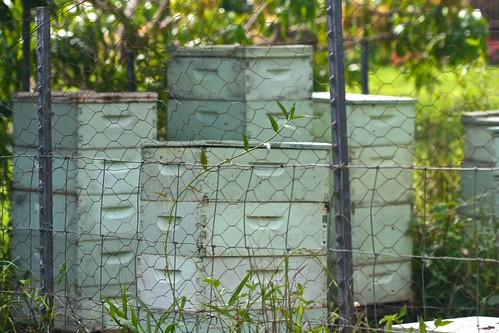
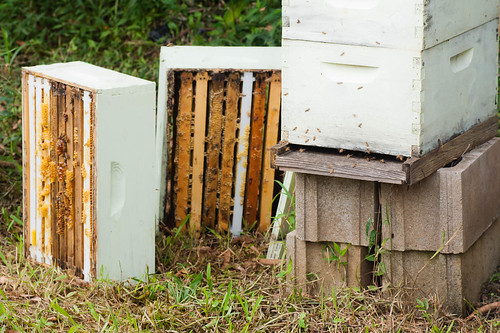
I spent the past few days visiting my folks in Jupiter, FL which is just north of West Palm Beach. One of their neighbors are hosting some hives on their land for a Florida beekeeping during the “winter” months. This particular beekeeper mainly provides pollination services for the various citrus groves in the area as well as farms and orchards on both the coasts.

20120217_BEE06

Right now, a small ground cover weed is in full bloom in the area which the bees are hitting hard. Looking at the blooms individually, they are very small and not an obvious source of pollen or nectar, but when you have 1 or 2 acres of the stuff, it is all of a sudden an excellent food source.

20120217_BEE10

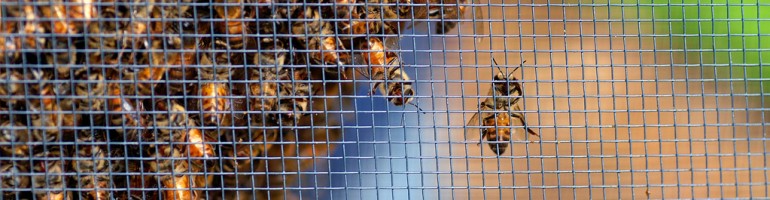
I stalked this one bee for a long time before I finally got a good shot to show all the pollen these tiny flowers are producing. This girl was loaded down with the stuff and wasn’t even taking the time to move all the pollen to her pollen sacs. She was literally covered head to toe with this white pollen.

20120217_BEE11

Bees will take advantage of whatever is available and goes to show that what most people consider weeds are vital for the local pollinators during the lean months before the major spring and summer blooms.

Leave a comment

Filed under beekeeping, pollination

Bee Starvation

It is not a very fun topic, but starvation is a major killer of managed bee hives each winter. Austin has experienced a very mild winter, which ironically, can put more of a strain on the hive’s resources than a cold one. We’ve had plenty of days where it is warm enough for the bees to go forage, but the energy expended finding food is no where near equal to what is available as most of the plants are dormant for the winter months. They would actually spend less energy clustered together in the hive if the temperatures were lower.

Luckily, most of the plants in Austin seem just as screwed up as well, and we are seeing a bloom cycle 3-4 weeks earlier than normal. The roses in my garden are about to go into full bloom when normally February 14th is the day in Central Texas where gardeners recommend pruning them.

This is why it is important to check your hives in the winter months on those mild days to ensure adequate foods stores still remain in the hive. If not, beekeepers usually recommend feeding granulated dry sugar as opposed to syrup during the winter as it is hard to keep the syrup over 50 F. If you find yourself in a situation where you have to feed in the winter, you will need to continue feeding until enough is blooming in the spring for the bees to become self-sufficient.

Leave a comment

Filed under beekeeping

Austin City Ordinance Meeting

Last evening, I got to participate in a review of a section of the City of Austin’s Beekeeping Ordinance. A resolution was passed last November basically stating Austin wanted to be more bee-friendly and prioritize removal and relocation of bees whenever possible over extermination.

The current language reads as follows under a section entitled DESTRUCTION OF WILD OR ABANDONED BEES:

Without notice and a hearing, the health authority may destroy:
(A) a colony not residing in a hive;
(B) a swarm of bees; or
(C) a colony residing in an abandoned standard or man-made hive.

The proposed language would add this language to the section:

Wherever reasonably possible, the City shall prioritize the removal and relocation of wild or abandoned bees over destruction.

It is not a large change, but at least Austin is attempting to update their codes in the recognition of the plight bees are facing in this day and age.

Perhaps the best change, in my opinion, is updating the contact list 311 uses when people call in with bee swarms or wild hives on their property. The list currently has extermination services first with bee removal services near the bottom. The new updated list will have removal services first with those that only provide extermination services at the bottom. Priority on the list will also be given to beekeepers and services that will come get swarms free of charge. The hope is to encourage people to use relocation services as opposed to killing the bees.

One of the local news stations was out covering the story that you can watch by clicking the link below.

KEYE TV :: News – Top Stories – Participants abuzz at meeting to decide how Austin can be bee friendly.

8 Comments

Filed under beekeeping, education

Final Check of the Season (one month later than I planned)

Austin had an unseasonably warm weekend to ring in 2012 so I took the opportunity to get in one last inspection of the hives. Between rainy weekends, Thanksgiving, our trip to Kauai and the holidays, it was later in the season than I would have preferred, but sometimes you just have to roll with the punches.

My main goals were to verify honey stores, remove any unneeded supers, and flip over the inner covers for better ventilation. The girls were not very happy to have their cozy hives opened up. This was the first and last closeup from the unsuited photographer.

Marge’s hive looked good with the top super still having 6 out of the 8 frames filled with honey. Knives’ hive was another story.

The late nectar flow we had in October was enough to fill two supers full of honey, but the fifth was asking too much. I ended up taking the top super off as there was minimal wax drawn out. Knives had a rough 2011 so I’m hoping 2 supers of brood and 2 supers of honey will get her through the winter and let her kick some butt next spring.

Happy New Year to all my readers and may 2012 bring you good health and happiness.

Leave a comment

Filed under beekeeping

Beekeeping in Kauai Part II

After Matt Moore took us on a tour of the gardens, we suited up to go visit the apiary. Before I get into that, here are some facts I learned about beekeeping in Hawaii:

  • Kauai is one of the few places left that doesn’t have Small Hive Beetles or Varroa Mite (I think it is ok if we hate Hawaiian beekeepers a little bit for that)
  • They do have wax moths and do have to worry about the common bee ailments like chalkbrood and nosema.
  • Starting a hive in Kauai is actually pretty hard because of all the restrictions on importing bees. Most folks have to either catch a swarm or make friends with a local beekeeper to get a split.
  • Coconut husks make great smoker fuel

I really liked this sign as we walked towards the apiary. The farm is 10 acres with fruit trees all over the place so this is a nice reminder you are entering an area with lots of bees.

Here is a shot of the apiary.

This is Matt Moore taking a cover off of one of the hives.

Matt has an interesting way of removing supers (at least interesting to me). Instead of stacking supers as he removes them, he upends them as shown in the picture. He feels he squishes less bees this way.

Matt’s lit smoker with coconut husk as fuel. It burns really well and produces a nice cool smoke.

Matt and I opening up one of his hives.

We spotted a queen on one of the first hives we opened up. Matt says the golden color is very typical of a Hawaiian Queen.

This was a nice frame of honey pulled from one of the hives.

I was going to make this a two part post, but I still have a bunch of miscellaneous photos from our visit that I’ll post soon. All in all, this was a great visit, and it is amazing how bees can adapt to all sorts of climates and geography.

2 Comments

Filed under beekeeping

Beekeeping in Kauai Part I

Aloha from the beautiful island of Kauai. Gitanjali and I will be spending the next week visiting our 50th State along with our friends Matt and Brenna. I was very curious about beekeeping practices in Hawaii so I arranged to meet up with Matt Moore who is a local beekeeper on the island. He keeps 30 or so hives on a beautiful 10 acre farm just northwest of Kapaa which is on the east side of Kauai. Before taking a peak at the hives, we explored the farm and got a sense of what the bees are currently using for pollen and nectar sources.

This is Okinawa Spinach which is an edible ground cover.

This is another shot of the spinach showing the pollen sac of a bee.

This is Malabar Spinach which is a perennial vine found in the tropics that also has edible leaves.

This is Tulsi Basil which is a variety of basil found in India.

Here we have the flower from a native Hawaiian yam.

I didn’t catch the name of this plant but it was similar to a Bird of Paradise.

While not a good source of nectar, the pollen from coconut trees was very attractive to the bees.

These were just a handful of the flora around the farm that the bees were visiting. With so much in bloom, I figured the girls would produce honey all year, but this side of the island is very rainy and during the winter months, it rains a lot off and on through March. So even though the bees don’t slow down due to colder weather, they do go through a “winter” cycle as the rain keeps them in the hive more often than not during these months.

Stay tuned for Part II. Mahalo.

Leave a comment

Filed under beekeeping

Winter is Coming

Sunday night saw our first dip near freezing since last winter. While Central Texas temperatures can fluctuate greatly in December from freezing to high in the 70’s, Austin beekeepers should be making their final preparations for the upcoming winter months.

I’d recommend having 4-5 medium supers on your hive to maximize your chances for a successful over-wintering with two of those mostly being honey stores. It is not too late to get some last minute feeding in if you feel the hive does not have enough socked away.

Ventilation is also extremely important. As bees warm the hive, condensation can form on the inner cover and then drip down cold water back into the hive. Flipping over the standard inner cover or propping open the cover with some popsicle sticks allows the warmer humid air to escape. It also allows the girls to add or remove propolis as they see fit to regulate the temperature.

I’ve never been one to wrap my hives for winter. It just doesn’t get that cold for that long here in Austin, and if my bees can’t survive a Texas winter without a wrapped hive, they don’t need to be part of the genetic pool.

That’s about it. Don’t forget to order new equipment and bees if you are starting new hives next year, and enjoy the next few months off before the Spring craziness starts.

4 Comments

Filed under beekeeping

Buyer Beware

This article from Food Safety News have been making the rounds over the past few days, and has some concerning information for folks buying honey. Nearly 75% of honey sold in stores have been heated and filtered to a point where all the pollen has been removed. In fact, if the bottle says it has been ultra-filtered, the USDA doesn’t even consider it to be honey anymore.

Pollen in honey is like a human fingerprint. It allows analysis to determine the region where the honey was produced which is an important tool used to help stop the import of foreign honey produced using questionable practices.

So make friends with your friendly neighborhood beekeeper or buy locally produced honey at a farmer’s market. What you’ll be tasting is a honey unique to your city or town.

2 Comments

Filed under beekeeping, education, honey

Fall Blooms

Knives’ hive has really been packing it away for winter. She now has two 8-frame supers full of the stuff and has started working on the third.

I had a really hard time getting the top most super off during this morning’s inspection. Not only does it weigh 50+ pounds, but the girls had also built a lot of comb filled with honey in between the two honey supers.

After a visit to the Lady Bird Johnson Wildflower Center last weekend, I thought I would collect as many photos as I could of bees collecting nectar and pollen.

Antique roses are a great source of pollen. Here is a Perle D’Or Rose:

This is a Louis Phillipe antique rose with a hoverfly:

Rock Rose isn’t a true rose, but it is in full bloom right now.

Prostrate Rosemary grows like a weed in Austin, and has very small blue blooms:

Fall Aster, crazily enough, blooms in the fall and the bees love it:

Kidney Wood is a native tree and the blooms actually smell like honey. I can see why the bees love it.

Even the hoverflies are getting in on the action.

The great thing about Central Texas is the prolific number of trees and flowers that bloom in the fall. Even after a terrible summer of drought, the number of fall blooms available gives the bees a chance to catch up and get ready for the winter.

3 Comments

Filed under beekeeping, honey, pollination

Just Add Water

A mere one week after the 2-3 inches of rain in the Austin area, we are experiencing a fall nectar flow that the girls are loving. Both of my hives have completely drawn out an 8 frame super each and have started filling them up with honey. Pollen is also plentiful and bees are returning to the hives filled to the brim with bright yellow pollen.

Full Pollen Sacs

This is a picture perfect frame from Knives’ hive of brood in the middle with capped honey on the outer edges of the frame.

Beautiful Frame of Brood and Honey

I encourage all my fellow Central Texas beekeepers to check their hives this week as you may be surprised by the amount of activity in your hives. It always amazes me how quickly bees can fill up a super with a good nectar flow so don’t be caught off guard and make sure your hive has plenty of room to accommodate this boon.

Leave a comment

Filed under beekeeping